
Printable Bloom's Taxonomy Verbs
Printable Bloom's Taxonomy Verbs - These verbs help us to describe and classify observable knowledge, skills, attitudes, behaviors and abilities. The verbs help us to explicitly state what the students must do to demonstrate learning. These should help you plan, create meaningful objectives, and encourage your students to extend their thinking. The classification of educational goals, a text published after a series of conferences between 1949 and 1953. Web benjamin bloom created a taxonomy of measurable verbs to help us describe and classify observable knowledge, skills, attitudes, behaviors and abilities. The framework consisted of 6 major categories: Web bloom’s taxonomy provides a list of action verbs based on each level of understanding. In an upcoming post we’re going to look at better use of bloom’s taxonomy in the classroom, but during research for that post it became interesting how. Web a taxonomy for learning, teaching, and assessing: Web bloom’s taxonomy action verbs. The framework elaborated by bloom and his collaborators consisted of six major categories: Remembering cognitive domains another situation recalling information understanding explaining idea or concepts applying using information in analyzing breaking information into parts evaluating A revision of bloom's taxonomy of educational objectives. And associated rubrics download the blooms digital taxonomy of verbs poster (wasabi learning) These verbs help us. Break down objects or ideas into simpler parts and find evidence to support generalizations. Web a taxonomy for learning, teaching, and assessing: Web bloom’s taxonomy verbs this table of verbs lists cognitive processes that fit into bloom’s six categories and help identify the cognitive complexity or the order of thinking. A revision of bloom's taxonomy of educational objectives. Web in. Web benjamin bloom created a taxonomy of measurable verbs to help us describe and classify observable knowledge, skills, attitudes, behaviors and abilities. Practical recommendations for a wide variety of ways mapping the taxonomy to the uses of current online technologies; Web a taxonomy for learning, teaching, and assessing: Break down objects or ideas into simpler parts and find evidence to. Web what are bloom's taxonomy verbs? A thorough orientation to the revised taxonomy; The framework consisted of 6 major categories: Web bloom’s taxonomy allows educators to gauge the learners’ progress. Web bloom's taxonomy is a classification of the different objectives and skills that instructors set for their students, which are known as learning objectives. Web revised bloom’s taxonomy action verbs definitions i.remembering ii.understanding iii. Demonstrate an understanding of the facts. Apply knowledge to actual situations. Web bloom’s taxonomy verbs this table of verbs lists cognitive processes that fit into bloom’s six categories and help identify the cognitive complexity or the order of thinking. By using verbs to identify goals, teachers can clearly communicate what. Web blooms taxonomy verb lists by masterpieces by molly free pdf booms taxonomy verbs are rich, enticing and seriously helpful when writing a daily objective. Each level of learning contains a list of bloom's taxonomy verbs for objectives. The framework consisted of 6 major categories: These verbs help us to describe and classify observable knowledge, skills, attitudes, behaviors and abilities. Web bloom taxonomy got its name from benjamin bloom. Knowledge, comprehension, application, analysis, synthesis, and evaluation. These verbs identify what actions a student should take based on where they're at in their learning journey. He was the head of the educators’ committee that devised the taxonomy. Web a taxonomy for learning, teaching, and assessing: Remembering cognitive domains another situation recalling information understanding explaining idea or concepts applying using information in analyzing breaking information into parts evaluating Use these verbs aligned with bloom's taxonomy levels to create discussion questions and lesson plans that ensure your students' thinking progress to higher levels. The framework elaborated by bloom and his collaborators consisted of six major categories: Web what are bloom's taxonomy verbs? Web in an effort to turn a high level taxonomy into meaningful classroom learning experiences a number of educators have translated each definition into a set of actionable bloom’s taxonomy verbs. These should help you plan, create meaningful objectives, and encourage your students to extend their thinking. A revision of bloom's taxonomy of educational objectives.
The Bloom's Taxonomy Verbs Poster for Teachers Taxonomía de bloom

The Bloom's Taxonomy Verbs Poster for Teachers verb poster The Bloom's

Revised Bloom's Taxonomy Action Words Action words, Blooms taxonomy

Bloom's Taxonomy Verbs Blooms taxonomy verbs, Taxonomy, Blooms taxonomy
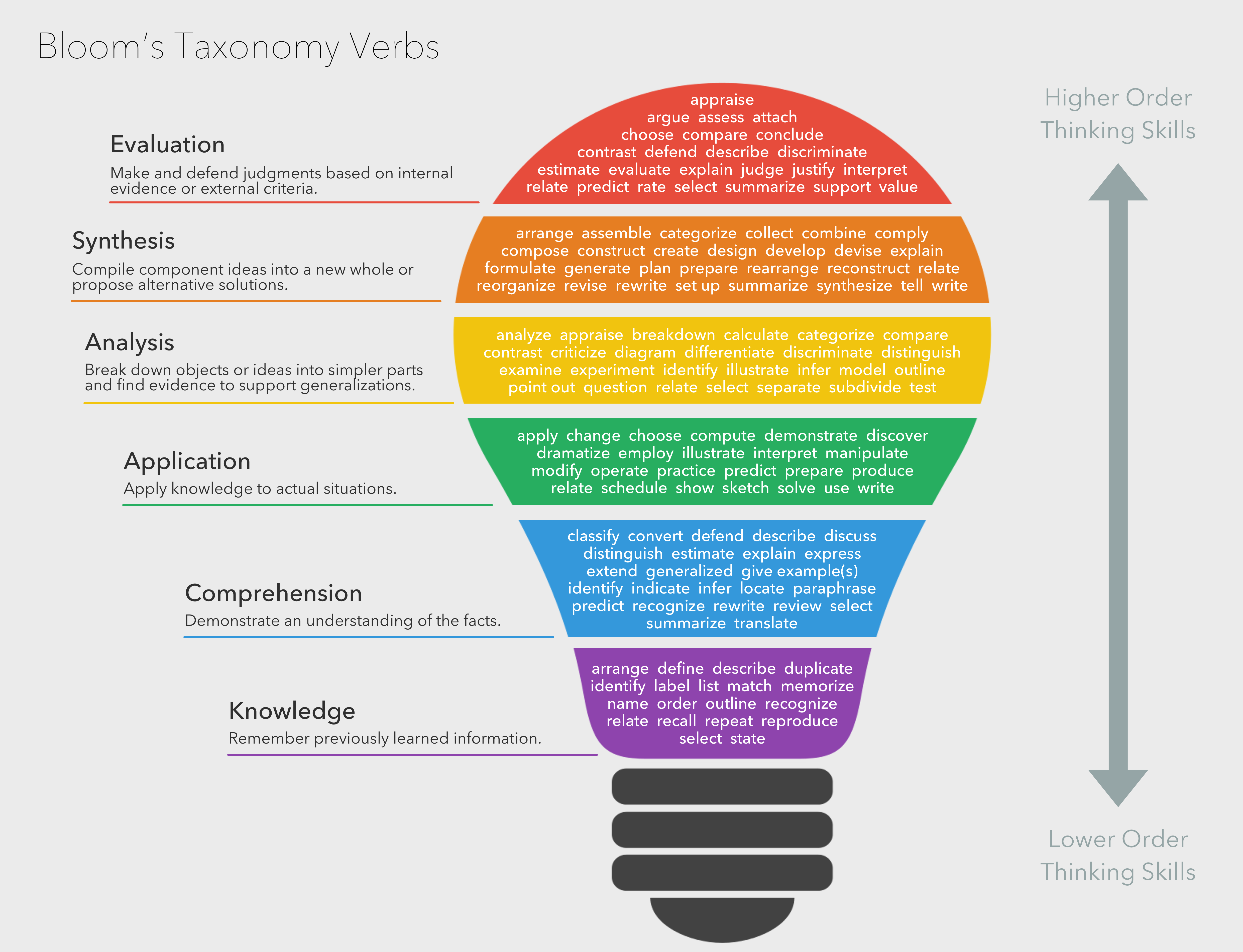
Bloom's Taxonomy Verbs Free Classroom Chart
In An Upcoming Post We’re Going To Look At Better Use Of Bloom’s Taxonomy In The Classroom, But During Research For That Post It Became Interesting How.
Break Down Objects Or Ideas Into Simpler Parts And Find Evidence To Support Generalizations.
And Associated Rubrics Download The Blooms Digital Taxonomy Of Verbs Poster (Wasabi Learning)
In 1956, Benjamin Bloom, An Educational Psychologist At The University Of Chicago Coined A Categorization Of Educational Goals.
Related Post: