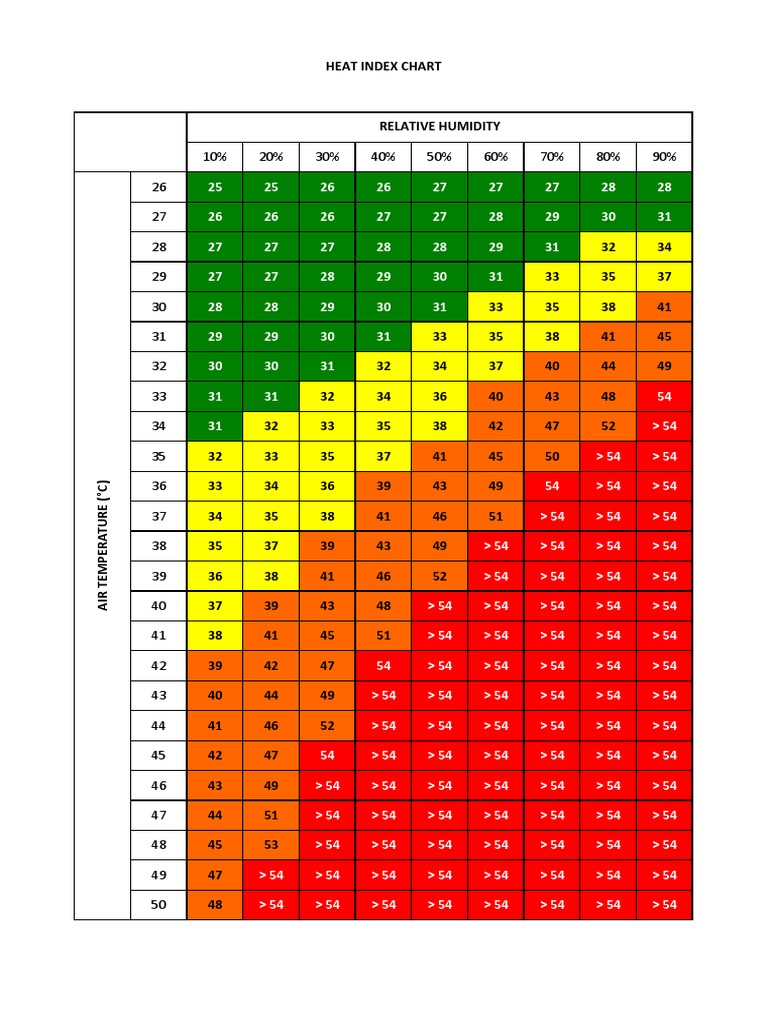
Printable Osha Heat Index Chart
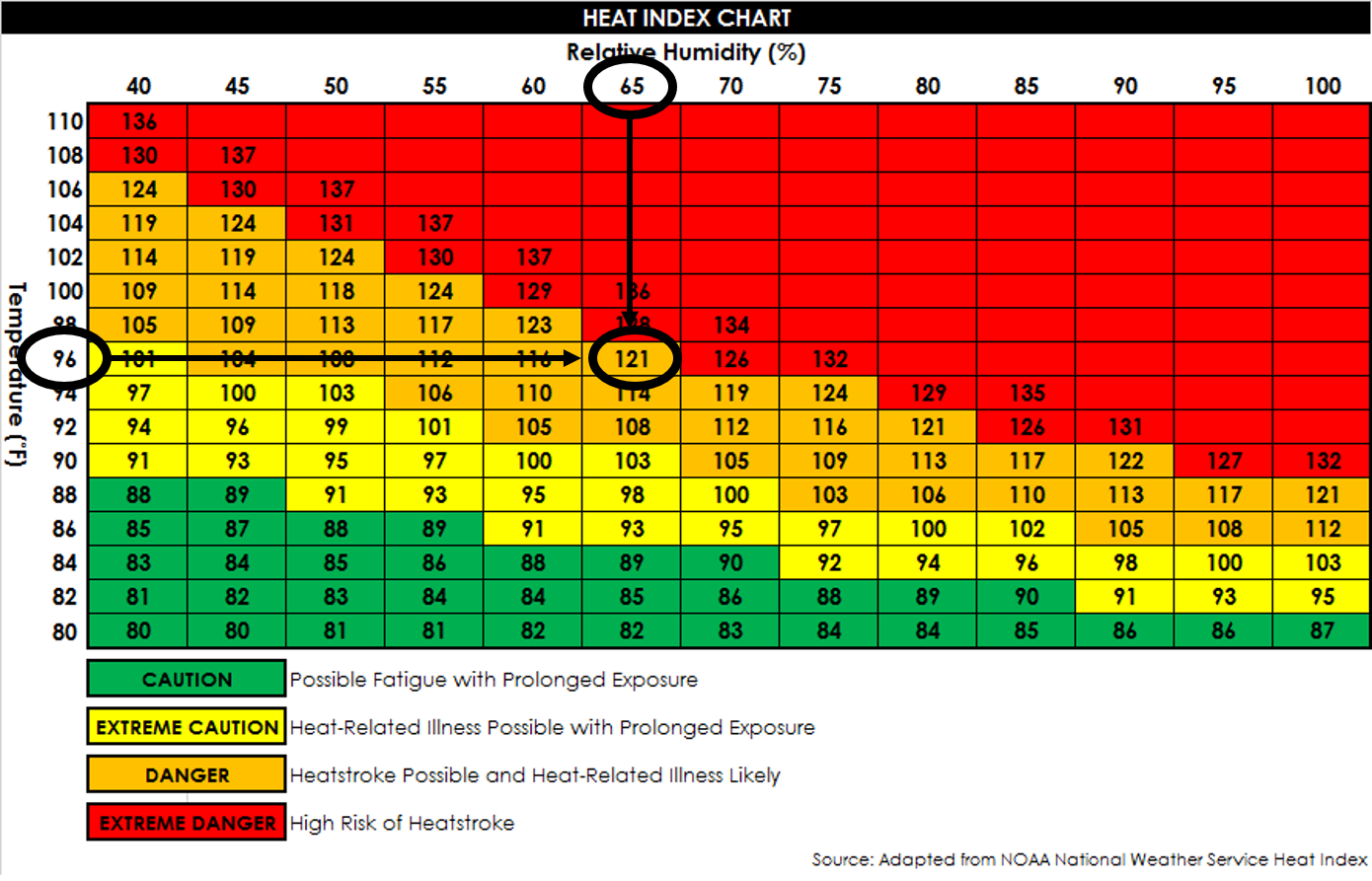
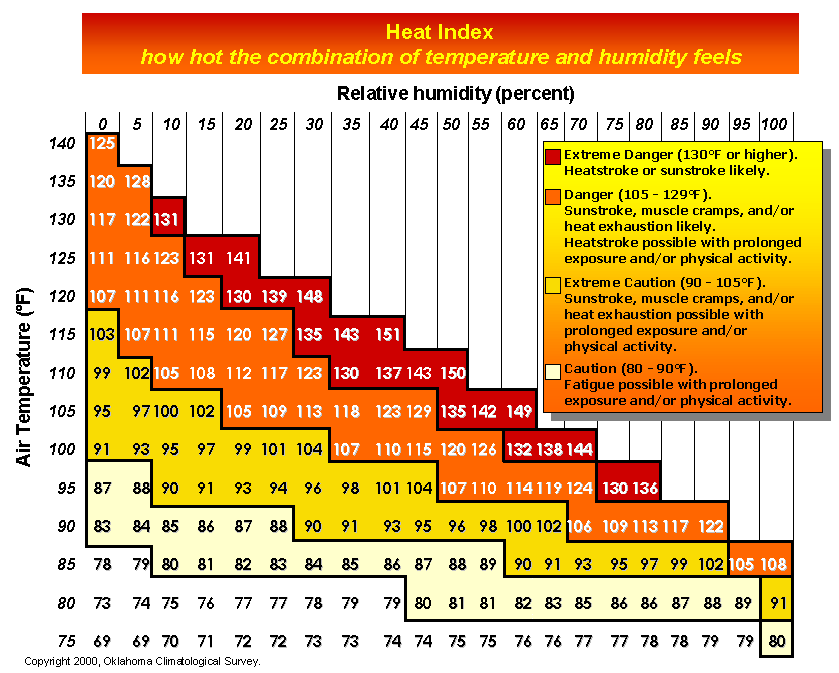
Printable Osha Heat Index Chart - Cease cooling when rectal temperature reaches 101 to 102°f (38.3 to 38.9°c). Maximum work period number of breaks: Maximum work period number of breaks Web the heat index is an accurate measure of how hot it really feels when the affects of humidity are added to high temperature. In general, workers should be taking hourly breaks whenever heat stress exceeds the limits shown. Web osha introduced the nws heat index chart into the trial record and pointed to it as evidence. Web heat index chart with health effects and safety recommendations how to use the chart: Web pressure) and mental status continually. 91° to 103°f (32° to 39°c) moderate: Less than 91°f (32°c) lower (caution) basic heat safety and planning: In general, workers should be taking hourly breaks whenever heat stress exceeds the limits shown. 91° to 103°f (32° to 39°c) moderate: Cease cooling when rectal temperature reaches 101 to 102°f (38.3 to 38.9°c). Web the heat index is an accurate measure of how hot it really feels when the affects of humidity are added to high temperature. Maximum work. Maximum work period number of breaks Web osha introduced the nws heat index chart into the trial record and pointed to it as evidence. Web heat index risk level protective measures; Web heat stress work/rest schedules using work/rest schedules can decrease the risk of heat illness: • t is not eaks wn. Web 6 hours agopublished 6:12 am edt, fri may 5, 2023. Go to www.wrh.noaa.gov/psr and select your location to obtain the local temperature. • t is not eaks wn. 91° to 103°f (32° to 39°c) moderate: Less than 91°f (32°c) lower (caution) basic heat safety and planning: Usps argued, however, that the chart’s second layer should be. Heat stroke or sunstroke likely. • t is not eaks wn. Maximum work period number of breaks Web maximum work period number of breaks maximum work period number of breaks; Air temperature above 90 degrees f. Heat stroke or sunstroke likely. Cease cooling when rectal temperature reaches 101 to 102°f (38.3 to 38.9°c). In general, workers should be taking hourly breaks whenever heat stress exceeds the limits shown. Web the heat index is an accurate measure of how hot it really feels when the affects of humidity are added to. Web heat index chart with health effects and safety recommendations how to use the chart: • t is not eaks wn. Web osha introduced the nws heat index chart into the trial record and pointed to it as evidence. Heat stroke or sunstroke likely. Web the following are environmental risk factors for heat illness (see heat index on page 4): Usps argued, however, that the chart’s second layer should be. Web the following are environmental risk factors for heat illness (see heat index on page 4): 91° to 103°f (32° to 39°c) moderate: Relative humidity above 40 percent radiant heat from. Heat stroke or sunstroke likely. Less than 91°f (32°c) lower (caution) basic heat safety and planning: 91° to 103°f (32° to 39°c) moderate: Web pressure) and mental status continually. Web the following are environmental risk factors for heat illness (see heat index on page 4): Go to www.wrh.noaa.gov/psr and select your location to obtain the local temperature. Web heat index chart with health effects and safety recommendations how to use the chart: Web heat stress work/rest schedules using work/rest schedules can decrease the risk of heat illness: Web maximum work period number of breaks maximum work period number of breaks; Cease cooling when rectal temperature reaches 101 to 102°f (38.3 to 38.9°c). 91° to 103°f (32° to. Maximum work period number of breaks: Web the heat index is an accurate measure of how hot it really feels when the affects of humidity are added to high temperature. 91° to 103°f (32° to 39°c) moderate: Web pressure) and mental status continually. Air temperature above 90 degrees f. Less than 91°f (32°c) lower (caution) basic heat safety and planning: Relative humidity above 40 percent radiant heat from. Maximum work period number of breaks Go to www.wrh.noaa.gov/psr and select your location to obtain the local temperature. Web the heat index is an accurate measure of how hot it really feels when the affects of humidity are added to high temperature. Web 6 hours agopublished 6:12 am edt, fri may 5, 2023. Web the following are environmental risk factors for heat illness (see heat index on page 4): Web heat index chart with health effects and safety recommendations how to use the chart: Maximum work period number of breaks: Web osha introduced the nws heat index chart into the trial record and pointed to it as evidence. Heat stroke or sunstroke likely. Cease cooling when rectal temperature reaches 101 to 102°f (38.3 to 38.9°c). Air temperature above 90 degrees f. Usps argued, however, that the chart’s second layer should be. 91° to 103°f (32° to 39°c) moderate: Web maximum work period number of breaks maximum work period number of breaks;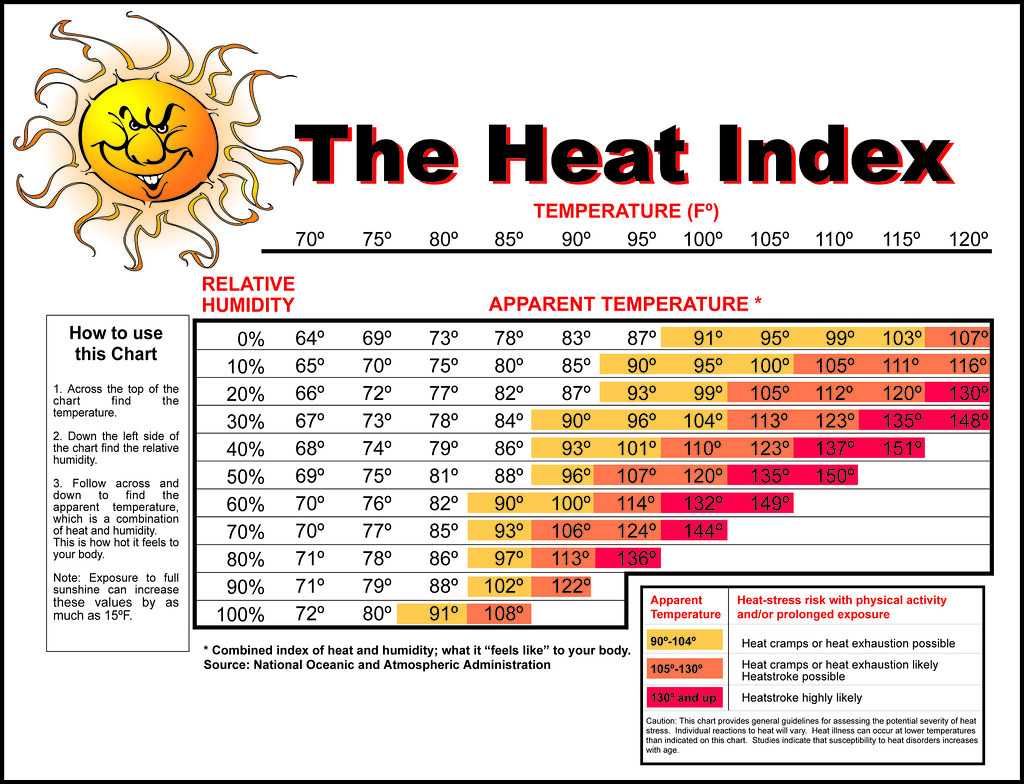
Heat Index Heat Index Chart

Beat the Heat Identifying and Preventing Heat Stress
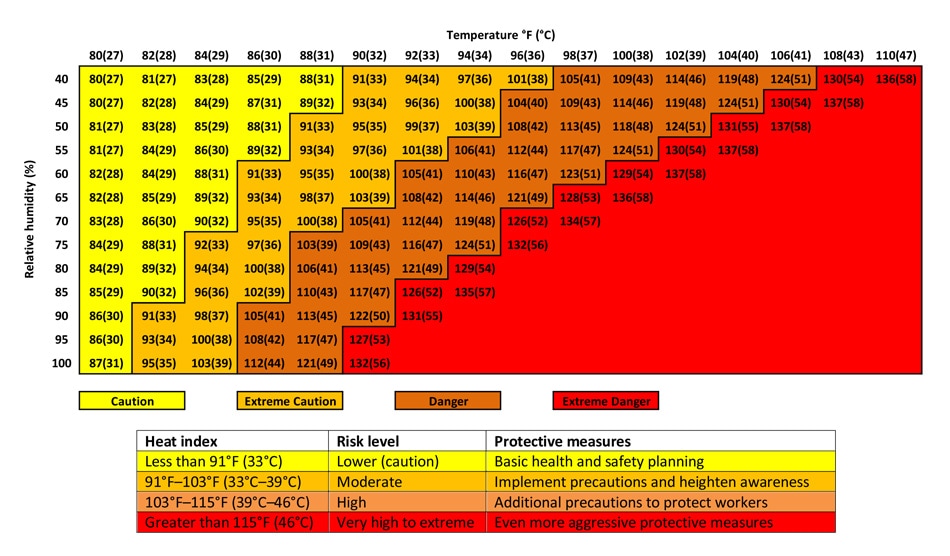
Heat Index Osha Heat Index Chart
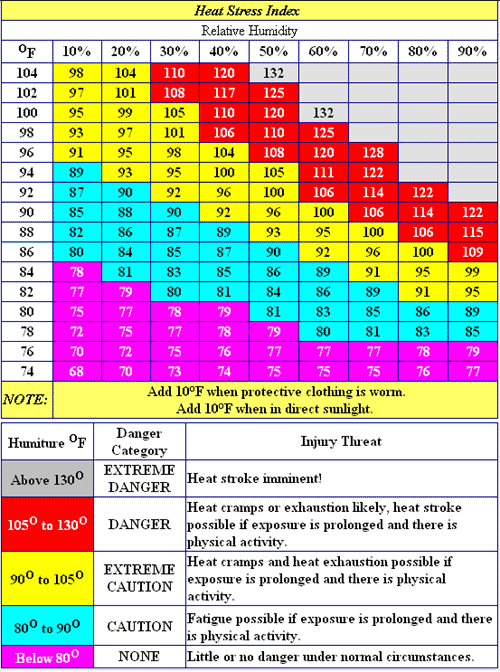
Heat Index Osha Heat Index Chart

Heat Index OSHA Safety Manuals
Heat Index Chart

Ohio.gov OCSWA Spring & Summer Weather Terms

Five Ways To Beat The Heat as you Clean EnvirOx
Heat Stress Monitoring OHSA Occupational Health Services Australia
Heat Index Osha Heat Index Chart
Web The Length And Frequency Of Rest Breaks Should Increase As Heat Stress Rises.
Web Heat Stress Work/Rest Schedules Using Work/Rest Schedules Can Decrease The Risk Of Heat Illness:
In General, Workers Should Be Taking Hourly Breaks Whenever Heat Stress Exceeds The Limits Shown.
Web Pressure) And Mental Status Continually.
Related Post: