
Printable Posterior Hip Precautions
Printable Posterior Hip Precautions - Web these 3 key precautions must be followed for at least 6 weeks following your surgery: The purpose of your hip precautions is to allow for the best healing and the most successful outcomes from your surgery. Web anterior hip precautions include: Web as per evidence based practice, the reasons why minimal posterior hip precautions can be used are: Do not cross your legs. • do not reach to put on your shoes or socks. Web what are hip precautions? No hip flexion >90 degrees no hip internal rotation or adduction beyond neutral none of the above motions combined anterior. Dislocating means to move a body part out of its usual position. The amount of weight allowed is: Web these two visual aids are graphically simple, clear, and educational for patients recovering from a tha. Do not bend your hip beyond 90° when standing or sitting do not cross your legs at the. No aggressive end range hip extension no external rotation (outwards turn of surgical leg) no crossing of legs no abduction of legs. Web anterior hip. Web these two visual aids are graphically simple, clear, and educational for patients recovering from a tha. Web a comprehensive overview of your experience before, during, and after surgery. These precautions prevent your new hip from popping out. Web posterior precautions • do not bend/reach to pick up items that are lower than your knees, or on the floor. Web. Do not turn knees inward or together. Don't bend your hip too far don't lean forward while you sit down or stand up, and don't bend past 90 degrees (like the angle in a letter. Current “standard” posterior hip precautions are based. • do not reach to pull up the. • do not reach to put on your shoes or. Web what are hip precautions? Web posterior hip precautions do not bend forward past 90 degrees. Regional anesthesia (spinal and/or epidural). Web hip replacement (posterior) precautions: Nsaids and opioids given immediately before procedure reduce postoperative pain. Don't bend your hip too far don't lean forward while you sit down or stand up, and don't bend past 90 degrees (like the angle in a letter. Do not bend your hip beyond 90° when standing or sitting do not cross your legs at the. Web general guidelines/ precautions: Current “standard” posterior hip precautions are based. No hip flexion. • do not reach to pull up the. Do not bend your hip beyond 90° when standing or sitting do not cross your legs at the. Do not cross your legs. Web posterior hip precautions do not bend forward past 90 degrees. • do not reach to put on your shoes or socks. Web posterior precautions • do not bend/reach to pick up items that are lower than your knees, or on the floor. Web these 3 key precautions must be followed for at least 6 weeks following your surgery: No hip flexion >90 degrees no hip internal rotation or adduction beyond neutral none of the above motions combined anterior. So you’ll need. Web as per evidence based practice, the reasons why minimal posterior hip precautions can be used are: The purpose of your hip precautions is to allow for the best healing and the most successful outcomes from your surgery. Nsaids and opioids given immediately before procedure reduce postoperative pain. Hip precautions are instructions about how to move or position your new. This means it can’t bend and turn as much as a natural hip. Do not turn toes inward and do not twist. Web general guidelines/ precautions: No hip flexion beyond 90 degrees, no hip internal rotation beyond neutral and no hip adduction beyond. The purpose of your hip precautions is to allow for the best healing and the most successful. Web anterior hip precautions include: Web posterior dislocation precautions after having hip replacement surgery you can put weight through your new hip. Web posterior hip precautions do not bend forward past 90 degrees. Web as per evidence based practice, the reasons why minimal posterior hip precautions can be used are: Web these two visual aids are graphically simple, clear, and. Web a comprehensive overview of your experience before, during, and after surgery. So you’ll need to move differently. Web the anterior approach to total hip replacement has the least amount of restrictions of any of the total hip surgical approaches. Do not turn toes inward and do not twist. Do not cross your legs. Web patients only patients only the following is a list of precautions to keep you from dislocating your hip. No aggressive end range hip extension no external rotation (outwards turn of surgical leg) no crossing of legs no abduction of legs. Web anterior hip precautions include: Web out of a car hip precautions your new hip has a limited safe range of motion. No hip flexion beyond 90 degrees, no hip internal rotation beyond neutral and no hip adduction beyond. Web as per evidence based practice, the reasons why minimal posterior hip precautions can be used are: Web general guidelines/ precautions: Do not turn knees inward or together. Do not bend your hip beyond 90° when standing or sitting do not cross your legs at the. Web what are hip precautions? These precautions prevent your new hip from popping out.
Posterior Hip Precautions buymiragej

Total Hip Replacement (Posterior Approach) Recovery Exercises Ask Doctor Jo YouTube Hip

THA Rehabilitation Recon Orthobullets
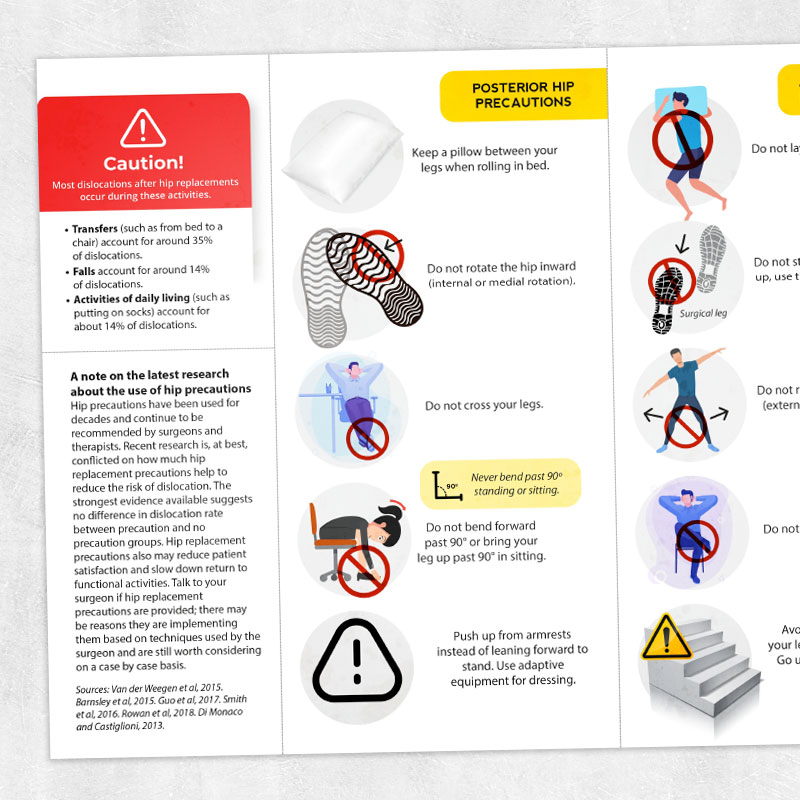
Visuals for Hip Precautions Printable handouts for speech, occupational, and physical therapists

Hip Precautions Hip replacement exercises, Occupational therapy, Occupational therapy assistant

Hip precautions for after surgery.. "Until your doctor says.. That's how long!!" Total hip

Patient Education Library MedBridge

Pin page

Hip Precautions Don'ts Hip precautions, Occupational therapy assistant, Physical therapist

Dislocation risk and 90 degree rule with videos Hip replacement exercises, Total hip
Web These Two Visual Aids Are Graphically Simple, Clear, And Educational For Patients Recovering From A Tha.
Don't Bend Your Hip Too Far Don't Lean Forward While You Sit Down Or Stand Up, And Don't Bend Past 90 Degrees (Like The Angle In A Letter.
Posterior Approach Total Hip Replacement.
The Purpose Of Your Hip Precautions Is To Allow For The Best Healing And The Most Successful Outcomes From Your Surgery.
Related Post: